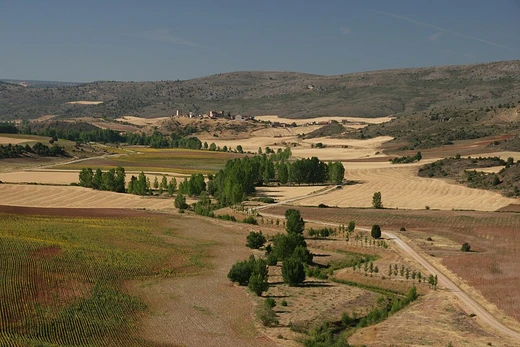
Negev
A desert region covering over half of Israel, rich in history and geology.

The Negev (Hebrew: הַנֶּגֶב, haNégev; Arabic: النقب, an-Naqab) is a desert and semidesert area in southern Israel, forming the bulk of the Southern District. Its largest city and administrative capital is Beersheba, and it contains development towns, Bedouin towns, kibbutzim, and the resort city of Eilat at its southern end. The Negev is notable for its unique geological features, including three enormous makhteshim (box canyons), and for being the home of Ben-Gurion University of the Negev, with research institutes focused on desert studies.
- Oldest Surface
- Approximately 1.8 million years
- Notable Settlements
- Dimona, Arad, Mitzpe Ramon, Rahat, Sde Boker
Reader's Guide
The Negev's significance lies in its role as a crossroads of ancient civilizations and its modern transformation into a hub for development and tourism. It contains the oldest continuously exposed surface on Earth, dating back 1.8 million years, and features unique geological formations like Makhtesh Ramon. The region's climate ranges from semi-arid in the north to extremely arid in the south, with Eilat receiving only 24 mm of rain annually. The Negev also hosts a variety of wildlife, including the critically endangered Kleinmann's tortoise and reintroduced Arabian oryx and Asiatic wild ass. Its cultural and natural attractions include Ein Avdat, Timna Park, and the desert cities of the Incense Road.
Did You Know?
- The Negev contains the oldest continuously exposed surface on Earth, with an approximate age of 1.8 million years.
- The Hebrew meaning of Negev, 'arid land,' likely originates from the Akkadian word nagbu, meaning 'groundwater.'
- The Negev is home to three unique box canyons called makhteshim, found nowhere else on Earth.
- A population of the critically endangered Kleinmann's tortoise (Negev tortoise) survives in the western and central Negev.
Frequently Asked Questions
What is the Negev and where is it located?
The Negev is a vast desert and semidesert region occupying the southern portion of Israel, forming the bulk of the country's Southern District. It stretches from the area around Beersheba in the north down to the Red Sea port of Eilat at its southern tip.
What geological features make the Negev stand out among other deserts?
The region is famous for its three massive makhteshim, or box canyons, which are among the largest of their kind in the world. Its surface also includes some of the oldest exposed rock in the area, dating back roughly 1.8 million years.
More in Deserts And Drylands 1-24
Elsewhere in the Deserts And Drylands universe
Spotted an error? Know more?
This is a living reference — every entry is fact-audited, and reader corrections feed straight into our audit queue. Suggest an edit · See this site's audit record