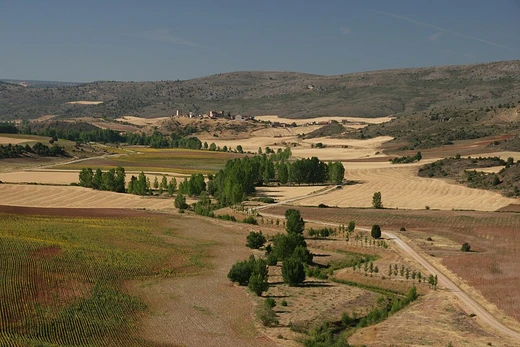
Kalahari Desert
Large semiarid savanna in Southern Africa with ancient wetter past.

Its name derives from the Tswana word Kgala, meaning 'the great thirst,' or Kgalagadi, meaning 'a waterless place,' reflecting vast areas of red sand without permanent surface water.
- location
- Botswana, Namibia, South Africa
- etymology
- From Tswana Kgala ('great thirst') or Kgalagadi ('waterless place')
- climate_type
- Subtropical semi-arid (Kalaharian)
- largest_underground_lake
- Dragon's Breath Cave (non-subglacial)
Lore & Background
The Kalahari Desert was not always arid. The only permanent river, the Okavango, forms a delta with rich marshes. Ancient dry riverbeds called Ouramba provide standing water in the rainy season. The climate is sub-humid in the north and east, and semi-arid in the south and west. The Kalaharian climate is subtropical, with average annual temperature ≥18°C, peaks above 40°C, and a dry season from April to September. Winter frost is common from June to August.
Reader's Guide
The Kalahari Desert's significance lies in its complex climatic history and ecological transition from a wetter Pleistocene landscape to a modern semi-arid savanna. This history informs understanding of global climate shifts and desertification processes. The Kalahari's vegetation ranges from xeric savanna in the south to denser cover in the north, challenging strict definitions of desert. The region's climatic mechanisms—involving the Intertropical Convergence Zone, trade winds, and thermal lows—affect rainfall patterns across southern Africa. The Kalahari remains a key area for studying semi-arid ecosystems, paleoclimate, and human-environment interactions, with ancient farming structures still visible via satellite imagery.
Did You Know?
- The Kalahari Desert was once much wetter, with large paleolakes and river systems during the late Pleistocene.
- The Dragon's Breath Cave contains the largest documented non-subglacial underground lake in the world.
- The kiwano fruit (horned melon) is endemic to a region in the Kalahari Desert.
- Ancient dikes and dams for farming, now filled with sediment, can be seen via Google Earth.
Sculpted by Wind and Heat
Deserts owe much of their character to relentless physical forces. Daily temperature swings place enormous stress on exposed rock, causing it to fracture and crumble over time. When rare but intense downpours strike these heated surfaces, the thermal shock can shatter stone entirely, scattering fragments across the ground. Wind then takes over as the primary sculptor, lifting fine sand and dust into the air where it can linger for long stretches, occasionally building into towering sand or dust storms. As airborne grains strike any solid surface in their path, they grind and smooth it down. Over vast periods, this process sorts particles into flat, even sheets or piles them into sweeping dunes. In other areas, the wind strips away all fine material, leaving behind a mosaic of polished stones known as desert pavements, where erosion effectively halts. Rocky outcrops, exposed bedrock, and clay deposits from ancient water flow also dot the landscape, while temporary lakes appear and vanish, leaving salt pans behind as the water evaporates. Underground aquifers and springs can sustain oases where water seeps to the surface.
Life Against the Odds
Survival in a desert demands extraordinary biological ingenuity. Vegetation here tends toward toughness and wiriness, often sporting small or absent leaves, water-resistant outer coatings, and defensive spines that discourage browsing animals. Some species are annuals that complete their entire life cycle—germination, flowering, and death—within mere weeks following a rainfall event. Others are long-lived perennials that develop extensive root networks capable of reaching deep underground moisture reserves. The animal kingdom faces its own set of challenges: staying cool, securing food, and conserving water. Many desert creatures are nocturnal, retreating into shade or burrows during the scorching daytime hours. They have evolved to extract nearly all their water needs from food and to produce highly concentrated urine. Some animals enter prolonged dormancy, waiting out months of aridity, then emerging to reproduce rapidly during the brief window of favorable conditions before retreating back into stasis. These strategies collectively allow life to persist in one of Earth's harshest environments.
Humanity's Ancient Struggle
For thousands of years, people have pressed forward into arid and semi-arid landscapes despite their punishing conditions. Nomadic groups have long moved their herds and flocks from one patch of grazing to the next, following the thin line of available forage. Where oases appeared, they offered a chance at more permanent settlement. The cultivation of semi-arid land, however, carries a hidden cost: it accelerates soil erosion and contributes to the broader process of desertification. Where water can be imported from outside sources, farming becomes viable—the Imperial Valley in California stands as a modern example of barren terrain transformed into productive farmland through irrigation. Across the Sahara, ancient trade routes carried caravans of camels laden with salt, gold, ivory, and other valuable goods. Tragically, these same routes also facilitated the northward transport of enslaved people. Today, deserts also offer potential for mineral extraction and, given their uninterrupted sunlight, represent promising sites for large-scale solar energy capture.
A Word and a World
The English word 'desert' and its Romance-language relatives—Italian and Portuguese deserto, French désert, Spanish desierto—all trace back to ecclesiastical Latin dēsertum, meaning 'an abandoned place,' derived from the verb dēserere, 'to abandon.' Before the twentieth century, English speakers commonly used the term to describe any sparsely populated region, with no necessary implication of dryness. Shakespeare's 'deserts of Bohemia' in The Winter's Tale and the phrase 'Great American Desert' carried this older, population-based meaning. Deserts can be further classified by prevailing temperature, by the causes behind their aridity, or by geographic location. Roughly one-third of Earth's land surface is arid or semi-arid, a figure that includes polar regions where snow replaces rain as the primary precipitation. These dry landscapes, both hot and cold, also play a role in moderating global temperature by reflecting a higher proportion of incoming sunlight than forests or oceans.
Frequently Asked Questions
How does Kalahari Desert's story end?
Rather than a single narrative arc, the Kalahari persists today as a living semiarid ecosystem that has shifted dramatically from a wetter, greener ancient environment into the sandy, sparsely vegetated savanna we recognize now. Its 'ending' is simply its ongoing existence as one of Africa's most extensive dryland biomes.
Why is Kalahari Desert important?
Covering an area comparable to several large nations, it anchors the ecology of three countries and supports a remarkable diversity of adapted flora and fauna in conditions where permanent rivers are absent. Its name itself—drawn from the Tswana Kgala for 'great thirst' or Kgalagadi for 'waterless place'—encapsulates the harsh yet resilient character of the region.
More in Deserts And Drylands 1-24
Related in Deserts And Drylands
Links follow this subject's own source article.
Elsewhere in the Deserts And Drylands universe
Spotted an error? Know more?
This is a living reference — every entry is fact-audited, and reader corrections feed straight into our audit queue. Suggest an edit · See this site's audit record